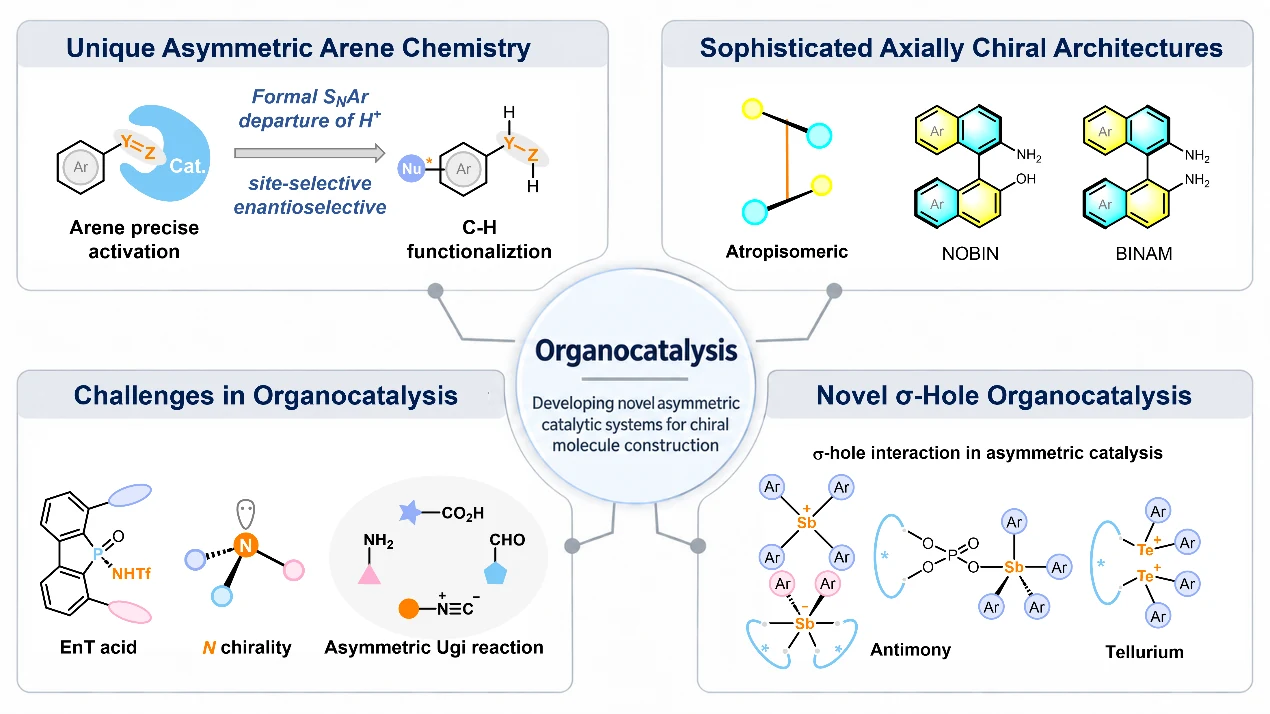
Our research program focuses on the development of novel concepts, catalytic systems, and synthetic strategies in asymmetric organocatalysis for the efficient construction of functional chiral molecules. A major direction of our research is the exploration of unique asymmetric arene chemistry, where precise activation of arenes enables site-selective and enantioselective C–H functionalization through unconventional reaction pathways. These advances provide new opportunities for the systematic construction of sophisticated axially chiral architectures, with particular emphasis on atropisomeric frameworks and synthetically valuable scaffolds such as NOBIN and BINAM. In parallel, we aim to address longstanding challenges in organocatalysis by developing new catalyst platforms and asymmetric transformations, including EnT acid catalysis, catalytic construction of N-centered chirality, and asymmetric Ugi multicomponent reactions. Beyond conventional activation modes, we are also exploring σ-hole interactions as an emerging platform for asymmetric organocatalysis, particularly through the design of antimony- and tellurium-based catalytic systems. By integrating catalyst design, reaction development, and mechanistic understanding, our research seeks to expand the conceptual and synthetic boundaries of asymmetric organocatalysis and establish broadly useful strategies for the precise construction of structurally diverse chiral molecules.
Research Direction 01
Unique asymmetric arene chemistry
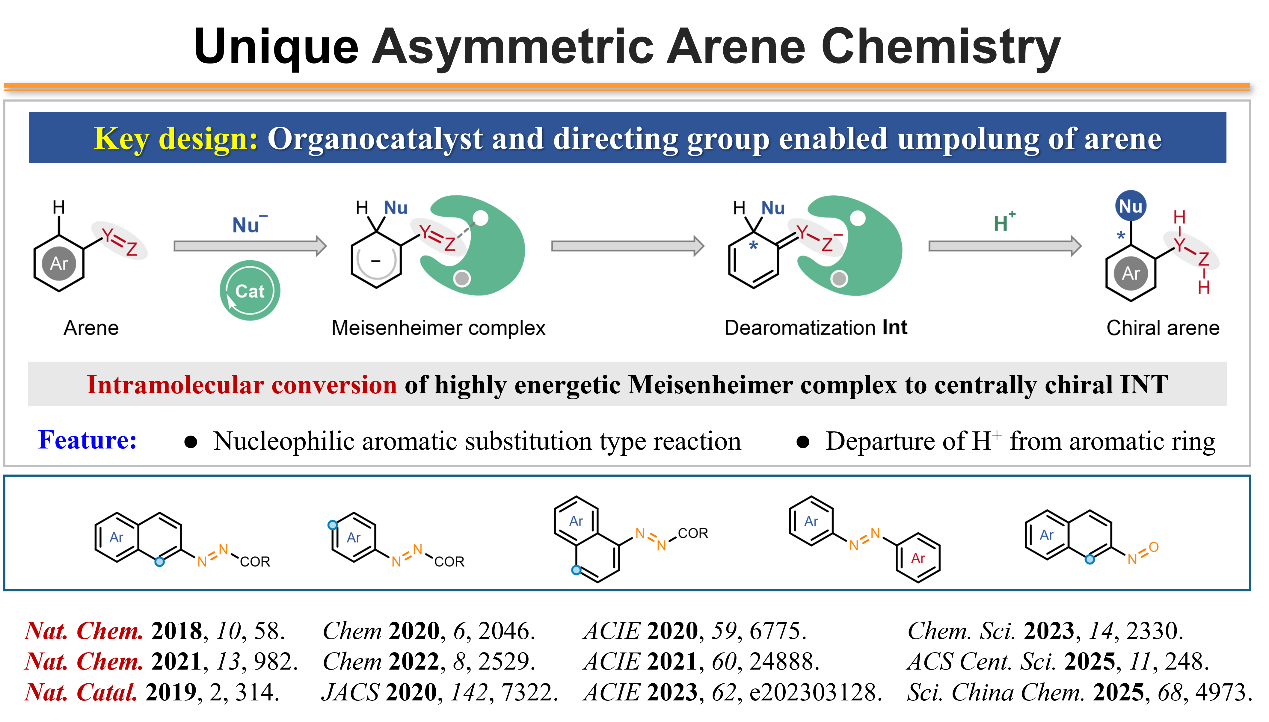
Classical arene functionalization is dominated by electrophilic aromatic substitution, whereas direct nucleophilic substitution of aromatic C–H bonds remains fundamentally challenging because of the high energy of the corresponding Meisenheimer intermediates and the difficulty of restoring aromaticity. We have developed a distinct organocatalytic strategy in which the cooperative action of an organocatalyst and a directing group enables polarity inversion (umpolung) of the arene, allowing nucleophilic attack on otherwise unactivated aromatic C–H sites. Rapid intramolecular conversion of the high-energy Meisenheimer intermediate into a configurationally defined dearomatized intermediate, followed by proton transfer and rearomatization, formally realizes an SNAr-type substitution of H+. This strategy enables site-selective and enantioselective C–H functionalization across diverse arene frameworks, providing a transition-metal-free platform for asymmetric arene functionalization and expanding the synthetic possibilities of nucleophile–arene coupling.
Research Direction 02
Sophisticated axially chiral architectures
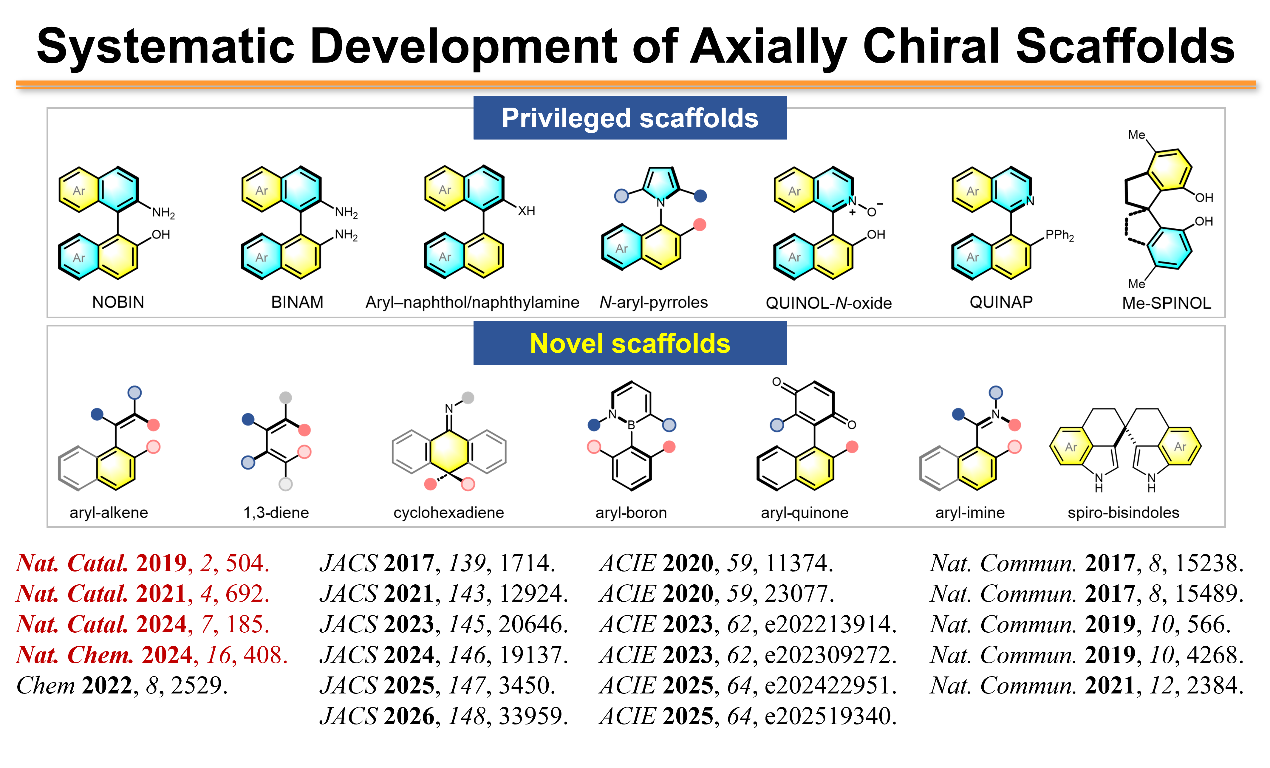
Our research focuses on the systematic development of axially chiral scaffolds through catalytic asymmetric synthesis. By integrating new arene chemistry with innovative catalytic strategies, we have established efficient approaches to a broad range of privileged axially chiral architectures, including NOBIN, BINAM, aryl–naphthol/naphthylamine frameworks, N-aryl pyrroles, QUINOL-N-oxides, QUINAP, and related scaffolds. Beyond these established structural motifs, we are particularly interested in expanding the structural diversity and conceptual boundaries of axial chirality through the discovery of novel axially chiral frameworks, including aryl-alkenes, 1,3-dienes, cyclohexadienes, aryl-boron, aryl-quinone, and aryl-imine systems. Through the combined development of new catalytic modes and new molecular architectures, our work aims to provide general and efficient strategies for the construction of structurally diverse axially chiral molecules and to broaden the scope and applications of axial chirality in asymmetric synthesis.
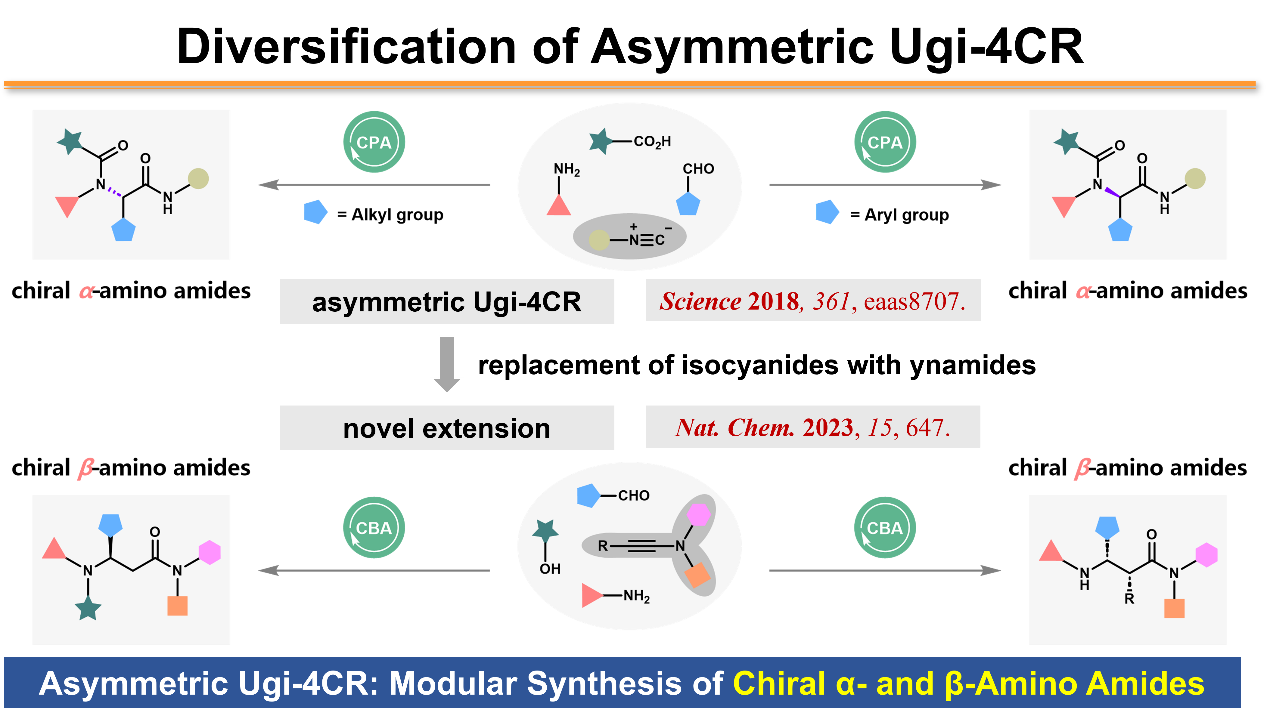
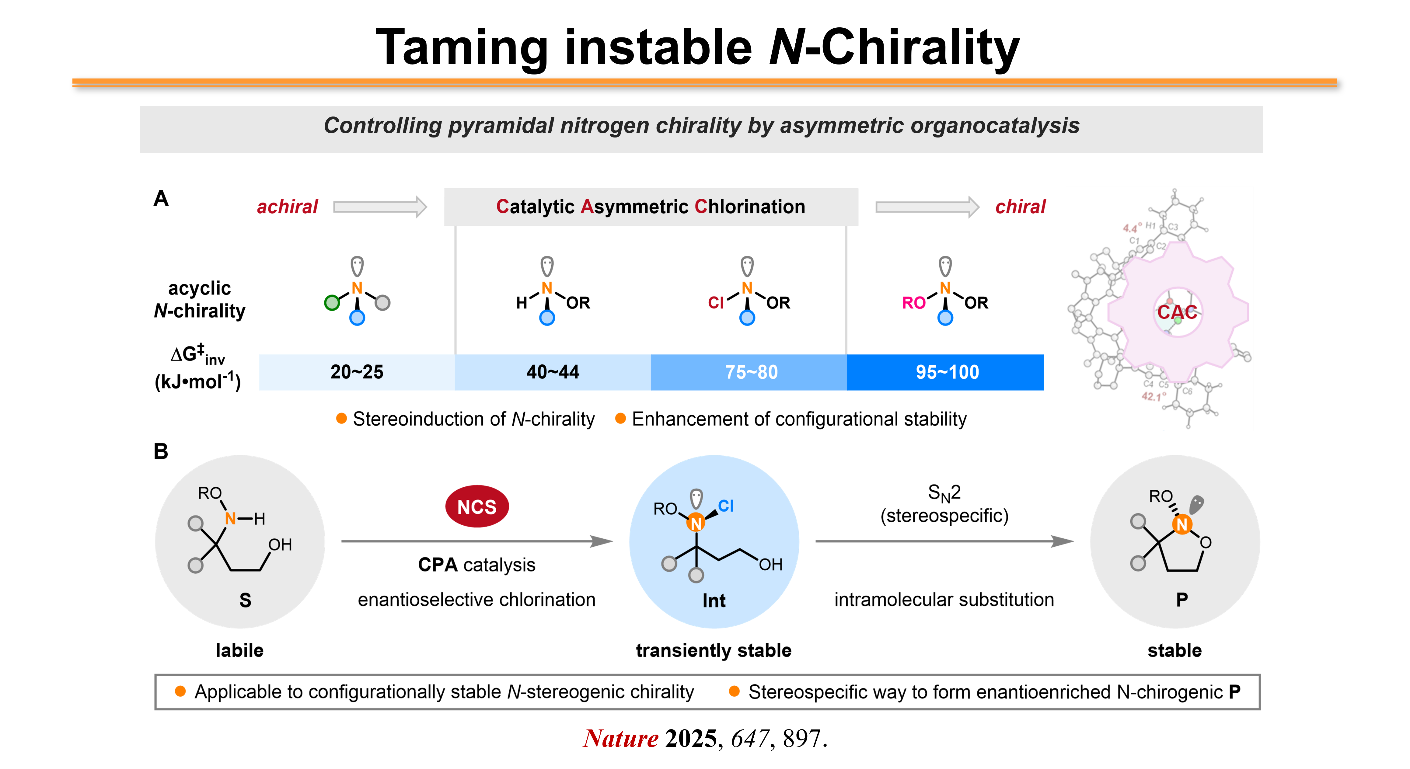
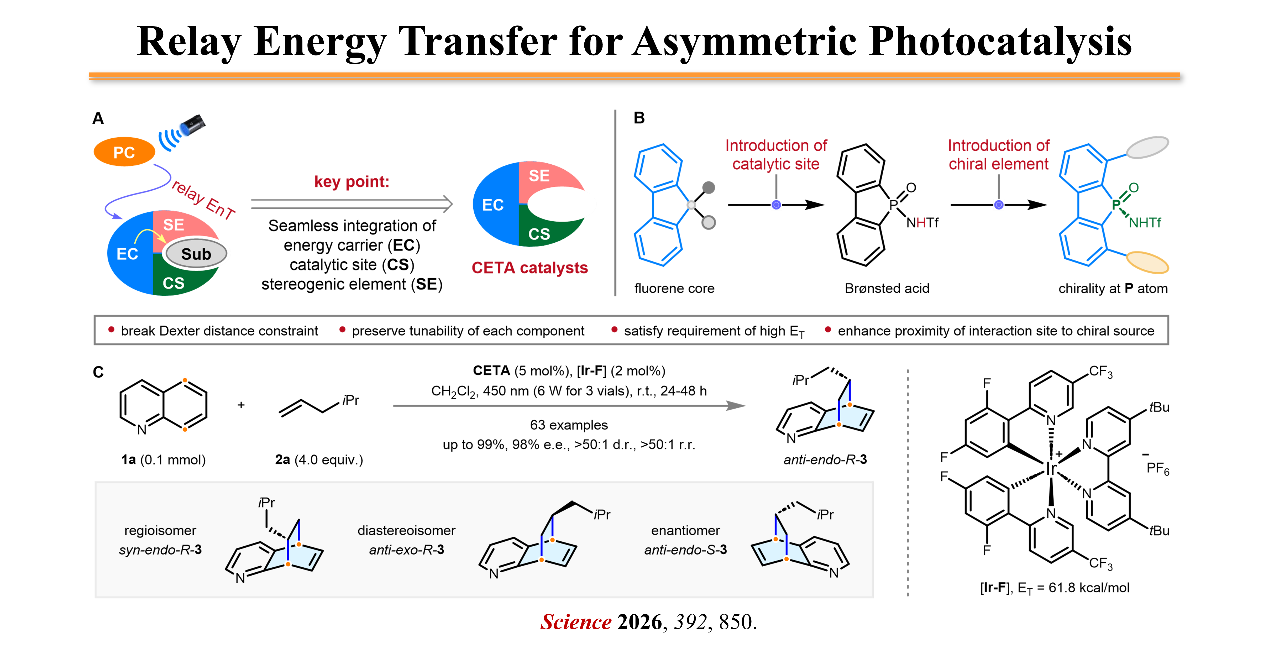
Our research addresses fundamental challenges that define the limits of asymmetric organocatalysis. We have expanded the capabilities of organocatalysis from stereocontrol in highly complex four-component Ugi reactions, to catalytic control of intrinsically labile pyramidal nitrogen chirality, and further to the development of chiral energy-transfer acids that integrate excited-state energy transfer with asymmetric induction. These advances overcome long-standing barriers in multicomponent stereocontrol, configurationally dynamic stereogenic centers, and asymmetric energy-transfer catalysis, respectively. By continually developing new catalyst architectures and activation modes, we aim to redefine what can be achieved with organocatalysis and open previously inaccessible areas of asymmetric synthesis.
Research Direction 04
Novel σ-hole-based organocatalysis
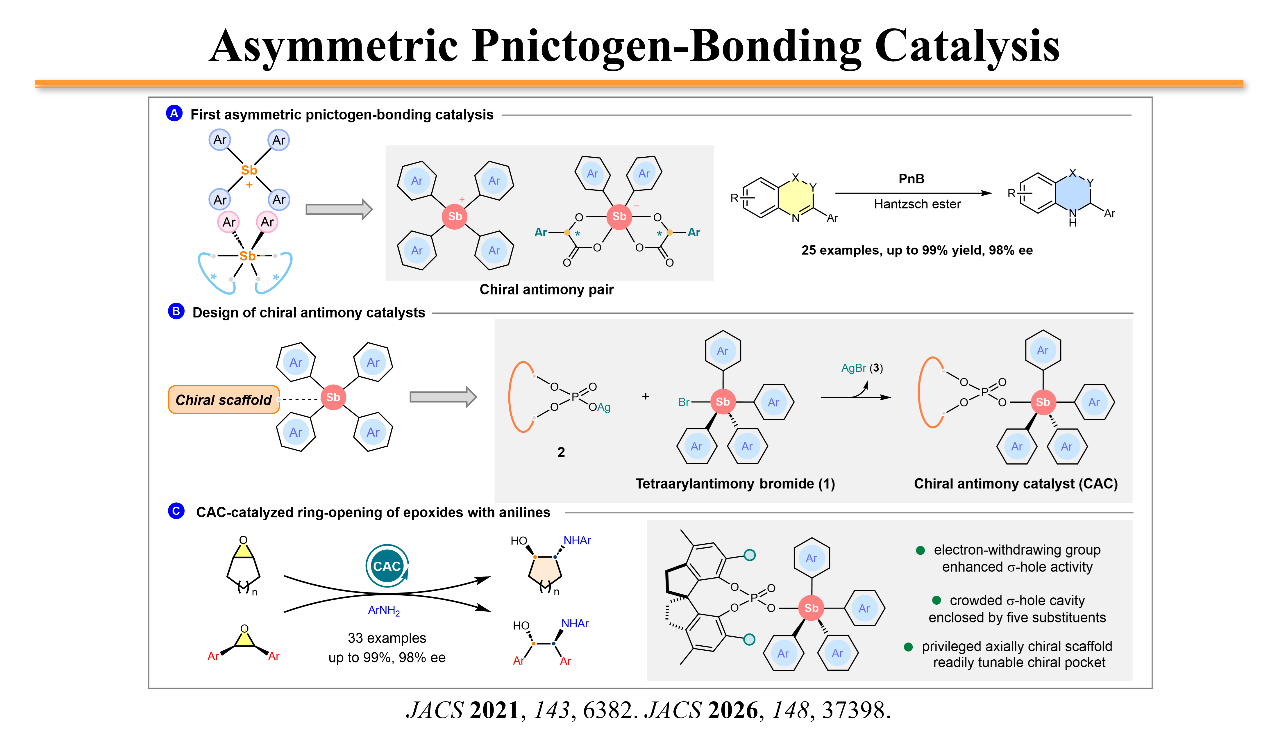
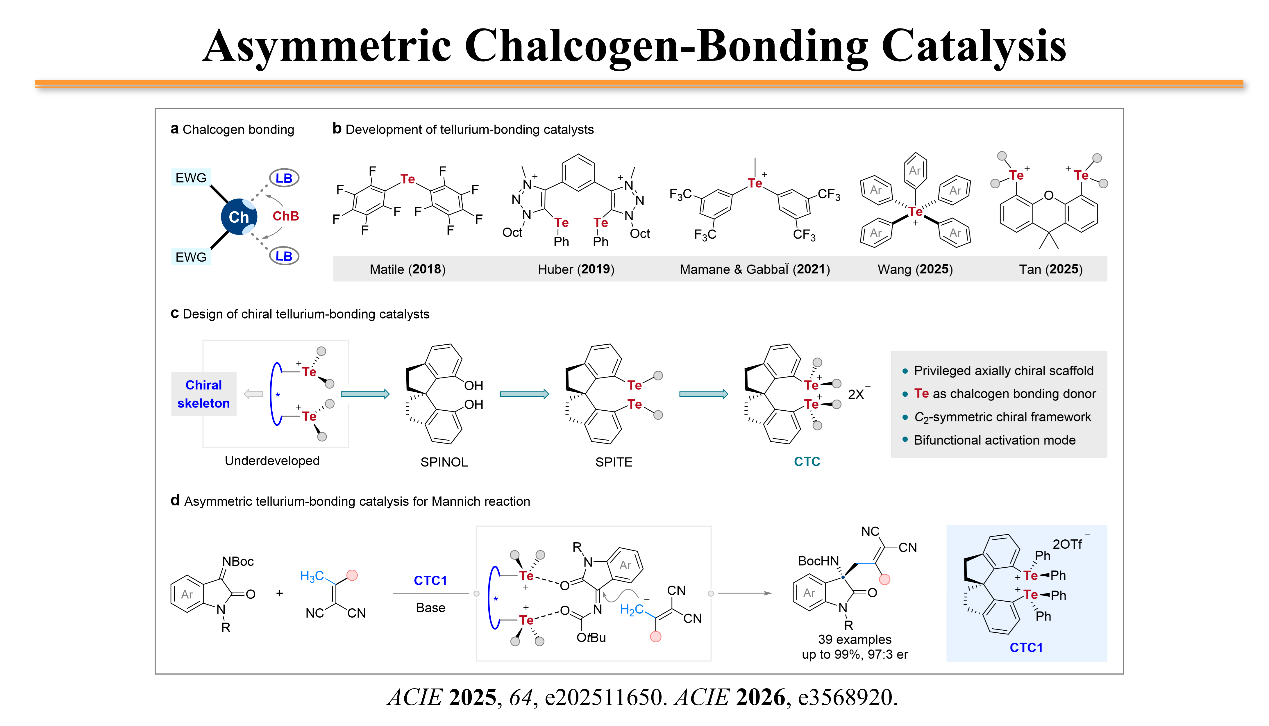
We seek to redefine the conceptual scope of organocatalysis by developing fundamentally new catalyst classes and activation modes based on σ-hole interactions. Whereas modern organocatalysis has been built predominantly upon hydrogen bonding, Brønsted acid–base chemistry, ion pairing, and related noncovalent interactions, our work introduces antimony and tellurium as new catalytic elements for asymmetric organocatalysis. Through the rational incorporation of these highly polarizable main-group centers into chiral architectures, we have developed new organocatalysts capable of combining strong, directional σ-hole interactions with precise stereochemical control. This strategy not only provides new catalysts for asymmetric synthesis, but also establishes a distinct catalytic principle that expands the mechanistic foundation of organocatalysis. By opening previously underexplored σ-hole interaction space to enantioselective catalysis, our studies contribute to the evolution of organocatalysis from a field dominated by a limited set of classical activation modes toward a broader and more diverse platform for molecular activation and stereocontrol.